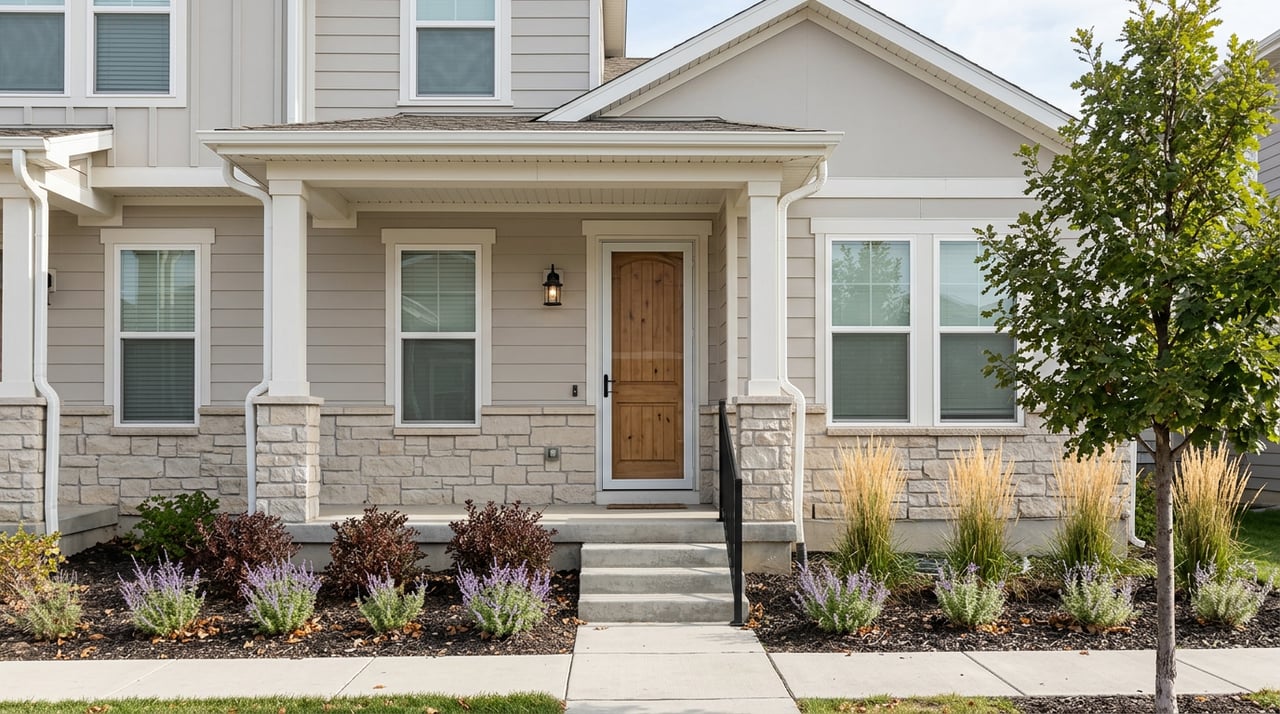
If you are eyeing Central Park, Denver for your first home, you are not alone. The master-planned community, formerly called Stapleton, blends parks, trails, town centers, and rail transit in one place. The flip side is a few unique fees and taxes that can change your monthly budget. In this guide, you will see 2026 price bands, what recurring costs to expect, commuting highlights, and smart ways to compete. Let’s dive in.
Central Park at a glance
Central Park sits on the former Stapleton airport site. In 2020, residents voted to change the neighborhood’s common name to Central Park, reflecting a fresh identity and community input. You can read the background on the name change at Denverite’s coverage of the decision.
- The neighborhood is anchored by a large central park, a network of pocket parks and greenways, and nearby open space, including Bluff Lake Nature Center. These outdoor assets and the trail system are daily-life perks for many buyers.
- You will find multiple town centers with local shops and services, including the East 29th Avenue Town Center and Conservatory Green retail nodes. Larger nearby retail like The Shops at Northfield and Stanley Marketplace add dining and shopping options.
Learn more:
- The community’s parks, trail network, and layout are summarized on the Central Park, Denver Wikipedia page.
- The 29th Avenue Town Center concept is profiled by the Congress for the New Urbanism.
- Bluff Lake Nature Center offers trails and habitat next door.
Getting around
Transit access is a major draw. Central Park Station on RTD’s A Line connects the neighborhood to Union Station in about 13 minutes and to Denver International Airport in about 24 minutes, station to station. This can be a time-saver for commuters and frequent flyers. Check RTD’s current schedules before trips to confirm run times.
What first-time buyers can expect to pay (2026)
It helps to ground your search with recent numbers. As of early 2026, multiple market trackers show the following for Central Park and ZIP 80238:
- The neighborhood’s median sale price sits near $685,000 based on a January 2026 snapshot.
- A well-known home value index for Central Park reads about $739,306 through January 31, 2026.
- ZIP 80238’s median listing price is about $720,250 through December 2025.
Entry points and typical ranges for first-time and move-up buyers:
- Condos and smaller stacked homes: roughly low to mid $300,000s to mid $400,000s. Recent examples include closings near the low $330,000s and around $495,000.
- Townhomes and larger rowhomes: about $450,000 to $750,000 depending on age, finishes, and location within Central Park. Mid-range examples around $585,000 are common.
- Single-family homes: about $700,000 to $1.2 million for many three or four bedroom models, with premium lots and newer builds reaching $1.4 million+.
Prices shift month to month. Use these as a dated guide and plan to verify current listings as you shop.
The monthly costs that surprise buyers
Central Park has layered recurring costs. Understanding them early helps you set a clear budget.
Why property taxes look different here
Central Park uses a special district structure that helped fund the community’s infrastructure. Two entities are involved: Westerly Creek Metropolitan District (WCMD) and Park Creek Metro District (PCMD). WCMD is the taxing and tax collection district. PCMD has historically financed and built major infrastructure. This set-up is the reason you will see a district-specific line on a property’s tax bill.
For 2026, WCMD certified a total mill levy of 68.514 mills. That includes approximately 66.459 mills for debt service and 2.055 mills for operations. This is only one part of your total property tax. City and county, schools, and other districts add their own levies on top.
MCA assessments and sub-HOAs
Central Park also has a Master Community Association (MCA). As of January 1, 2026, the MCA assessment for most for-sale residential homes is $58 per month. The MCA funds community programming and upkeep for shared amenities, including parks, pools, and events.
Some homes also belong to a sub-HOA. These vary widely by building type and services provided. In recent listings around Central Park, sub-HOA fees can range from about $56 per month for some single-family homes to $300–$400+ per month for townhomes or buildings that include exterior maintenance, insurance, landscaping, and shared utilities. Always review the sub-HOA declaration, budget, and what is covered.
Quick cost reference for buyers
| Cost item | What it covers | 2026 example |
|---|---|---|
| City and county property tax | General property tax from city, county, schools, and other districts | Varies by assessed value and all mill levies |
| WCMD special district tax | Portion of tax that funds Central Park infrastructure debt and operations | 68.514 mills in 2026. See illustrative example below |
| MCA assessment | Community programs, parks, pools, and master-level maintenance | $58 per month for most for-sale residential homes |
| Sub-HOA (if applicable) | Building or subdivision services such as exterior insurance, landscaping, snow, and more | Commonly $56 to $400+ per month, varies by property |
Sources and further reading:
- Why WCMD and PCMD exist, and how they interact: Front Porch NE report.
- WCMD 2026 adopted budget and mill levy: official district document.
- MCA assessment schedule effective January 1, 2026: Central Park MCA.
Illustrative tax example
Here is a simple way to see how the WCMD line is calculated. Colorado taxes start with an assessed value, which is the market value multiplied by the state residential assessment rate. The dollar amount for any district is calculated as assessed value divided by 1,000, then multiplied by that district’s mills.
- If you use a ZIP 80238 median listing price of about $720,250 from December 2025, and apply a local government residential assessment rate that was 6.25% in 2025, the assessed value would be about $45,016.
- Using the WCMD 2026 levy of 68.514 mills, the WCMD portion would be roughly $3,085 per year. That result comes from 45,016 multiplied by 68.514, divided by 1,000.
This is only the WCMD line. Your total tax bill will be higher once city, county, school, and other district levies are included. Assessment rules can change, and actual calculations can vary. Confirm current assessment rates at the Colorado Division of Property Taxation and verify levies and dollar amounts with the county assessor for a specific property.
Commute, parks, and daily convenience
If you value a car-light lifestyle, Central Park is designed with daily needs nearby. The 29th Avenue Town Center and Conservatory Green offer local shops and services. Larger retail is close, and the trail network links many blocks to parks and open space. Central Park Station on the A Line makes trips to downtown or the airport straightforward for many residents.
- Name change background: Denverite’s report
- Neighborhood overview: Central Park, Denver on Wikipedia
- Town center design: CNU feature on 29th Avenue Town Center
- Nature next door: Bluff Lake Nature Center
- A Line travel times: Central Park Station on Wikipedia
How to compete and win
Central Park can be competitive. Recent trackers show a share of homes selling at or above list, so your first offer should feel strong and credible. These tactics tend to help:
- Get locally strong financing. Ask your lender for a full pre-approval or pre-underwriting letter. Sellers value certainty.
- Consider a capped appraisal-gap pledge. If you can safely afford it, agree to cover a defined gap, such as $10,000 to $25,000, if the appraisal comes in short. This reduces seller risk while protecting you with a cap. Always clear this with your lender.
- Use an escalation clause carefully. It can keep you in front without overpaying upfront. Set a sensible cap and require proof of the competing offer.
- Keep contingencies clean and timelines tight. Shorten inspection windows where comfortable, increase earnest money, and match the seller’s ideal closing date. Do not waive key protections unless you fully understand the risks.
For a plain-English overview of bidding war options, see this guide from Rocket Mortgage.
Buying new construction here
Several builders have delivered homes across Central Park’s sub-neighborhoods. If you explore new homes, ask for the builder contract early and note:
- Deposit and refund terms
- Deadlines for financing and design choices
- What is included in the base price versus options
- Expected delivery, occupancy timing, and any rent-back needs
Builders often prefer offering incentives like rate buydowns or closing cost credits rather than price reductions. A local agent who knows the community and builders can help you compare the total package.
Is Central Park a fit for you?
You get walkable town centers, a true park system, and direct rail to downtown and the airport. Prices range from beginner-friendly condos to premium single-family homes. The layered costs are predictable if you map them out early. If the lifestyle and commute match your needs, Central Park can be a smart first home with room to grow.
Ready to talk next steps, current listings, or how to structure a winning offer? Reach out to Lane Lyon for a clear, local plan tailored to your budget and timeline.
FAQs
What will my monthly housing cost include in Central Park?
- Mortgage payment, full property taxes from all taxing entities, the WCMD special district portion, the MCA assessment (about $58 per month for most for-sale homes in 2026), any sub-HOA dues, homeowner’s insurance, and utilities.
How long is the train from Central Park to downtown or DIA?
- Central Park Station on the A Line reaches Union Station in about 13 minutes and Denver International Airport in about 24 minutes, station to station. Check RTD schedules for current times.
Are there affordable options for first-time buyers in Central Park?
- Yes. Condos and smaller homes have recently sold in the low to mid $300,000s to mid $400,000s, and some townhomes price in the $400,000s to $500,000s. Inventory changes weekly, so set alerts and act quickly.
Why are property taxes different in Central Park?
- Central Park includes a special district, WCMD, that adds a mill levy to fund infrastructure debt and operations. This appears as a separate line on tax bills, in addition to city, county, and school levies.
What is the difference between the MCA and my HOA?
- The MCA is a master association that funds community programming and shared amenities across Central Park. A sub-HOA, if present, is tied to a specific building or subdivision and covers items like exterior maintenance or insurance.
How can I estimate my WCMD tax for a specific home?
- Take the county’s assessed value and multiply by the current WCMD mill levy, then divide by 1,000. Use the district’s adopted levy for the tax year and confirm all math with the county assessor before finalizing a budget.